
- Arrest Records
- Judgments
- Bankruptcies
- DUIs & DWIs
- Felonies
- Warrants
- Jail Records
- Lien Records
- Sex Offenses
- Misdemeanors
- Criminal Records
- Federal Dockets
What are Virginia Court Records?
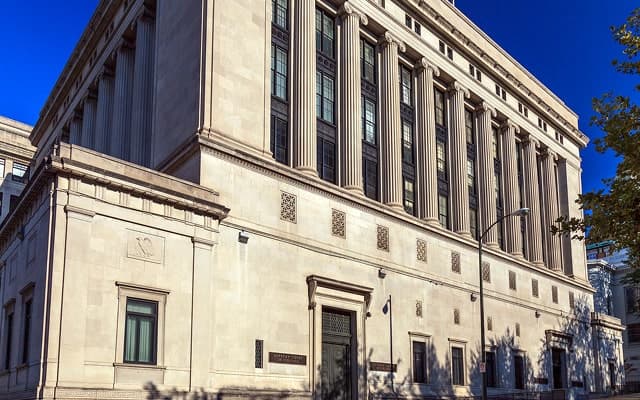
Virginia has a population of 8.8 million, making it the twelfth largest state in terms of population. The Virginia court system is comprised of a state supreme court, a state court of appeals, and trial courts of general and limited jurisdiction. Its trial courts include circuit, district (general and juvenile/domestic relations), and magistrate courts. The state's judicial system handles a whopping 3.2 million cases per year.
As formal documentation of a trial or hearing, Virginia court records are considered public records in the state. Virginia courts are responsible for creating and maintaining these records, which include complaints in civil cases and indictments in criminal prosecutions. These records include:
Docket Sheets
These are official trial records that provide crucial information on the parties, judges, and attorneys of record. They include a list of the documents used during the trial, along with the date of filing and the court record number assigned to each document.
Judgments and Orders
These records contain the jury's or judge's decisions. They include the final decision that outlines the punishments and responsibilities for each side and are signed by the judge after the trial.
Transcripts
These are written records of court sessions. They document the judges' rulings and are useful as supporting documentation for a motion or when filing an appeal request.
Evidence
This includes physical and written evidence gathered from police investigations and presented by both sides of the argument.
Court Minutes
These record the start and end times of a trial. They contain a summary of the court proceedings, including recesses, testimony, and official statements, and also list the names of the lawyers and witnesses.
Pleadings
These are official written declarations, including motions, plea agreements, and complaints, that list the claims made by each party to the case.
Briefs
These are written arguments that attorneys submit to the court. They are intended to assist the court in resolving the case's legal disputes.
The majority of these records are accessible to anyone who knows the specifics of the case they are interested in, such as the names of the parties or the case numbers. However, there may be restrictions, such as juvenile records or records including personal information.
Types of Court Cases
The two main categories of court trials are criminal and civil. Despite their many similarities, the necessary levels of proof and the potential penalties are the primary distinctions between these case types. Other categories include family and traffic cases.
Civil Cases
Conflicts between individuals and organizations are settled through civil trials. A significant and unique feature of civil cases is that they do not result in incarceration or other serious loss of rights. Rather, civil lawsuits are settled by addressing the root cause of the dispute, stopping certain activities, or paying fines. They are meant to resolve conflicts.
A case usually begins when one individual or group (the plaintiff) claims that another individual or group (the defendant) has harmed them. The plaintiff asks the court for redress by filing a complaint and starting a legal action. The plaintiff may seek damages or monetary compensation to compensate for their losses or injuries. They might also ask for an injunction, which stops the defendant from doing something.
The case may be decided by a jury or a judge. Another option is for the parties to reach a settlement among themselves, which usually means they come to a financial agreement. There is no legal right to counsel in a civil lawsuit. Civil parties must either employ their counsel or appear in court on their own behalf.
Civil attorneys are required to meet a standard of proof known as the "preponderance of the evidence." This indicates that the winning side's evidence had a higher probability of being true. Decisions are not impacted by the amount of evidence offered but are based upon the persuasiveness of the evidence that is presented. Unanimity is also not necessary for a civil judgment.
Criminal Cases
When someone is accused of a crime by a prosecutor (representing the government), a criminal case is formed. Criminal cases remove or rehabilitate lawbreakers from society and discourage such behavior in the future. Criminal trials often commence when the offender is taken into custody and charged, typically during an indictment hearing.
A jury of their peers is entitled to try defendants in criminal trials. Each jury is hand-picked from a randomly selected pool of district residents, and the judge conducts interviews with them to remove any potential bias. Defendants have the option of a bench trial without a jury. In contrast to civil cases, defendants are entitled to legal representation in a criminal case.
Unlike juries in civil cases, criminal juries must vote unanimously. The reason for this high standard is the far harsher punishments that could be meted out in a criminal prosecution if found guilty of a crime. The punishment in a criminal case might include community service, jail time, a fine, or a mixture of all three.
What Are the Different Courts in Virginia?
Virginia's court system has two appellate courts, a statewide circuit court trial level, and district courts of limited jurisdiction in every county and city. The Judicial Department's budget was about $694 million in fiscal year 2025.
| Court Level | Court Name | Jurisdiction | Key Functions |
|---|---|---|---|
| Appellate | Supreme Court of Virginia | Statewide; limited original jurisdiction | Reviews lower court decisions and hears habeas corpus, mandamus, prohibition and actual innocence petitions. |
| Appellate | Court of Appeals of Virginia | Statewide intermediate appellate | Reviews appeals to speed up review and expand appellate capacity. |
| General Jurisdiction | Circuit Courts | Serious criminal cases, larger civil claims, divorce and family matters | Main trial court; also hears appeals from the district courts. |
| Limited Jurisdiction | General District Courts | Misdemeanors, traffic infractions, smaller civil claims | Holds preliminary hearings in felonies; handles contract, debt and landlord-tenant cases. |
| Limited Jurisdiction | Juvenile and Domestic Relations District Courts | Juvenile delinquency, family and household member cases | Handles custody, visitation, support and child abuse or neglect matters. |
| Limited Jurisdiction | Magistrate System | Each judicial district | Reviews complaints, sets bail and issues warrants, subpoenas and emergency protective orders. |
How Many Federal Courts Are In Virginia?
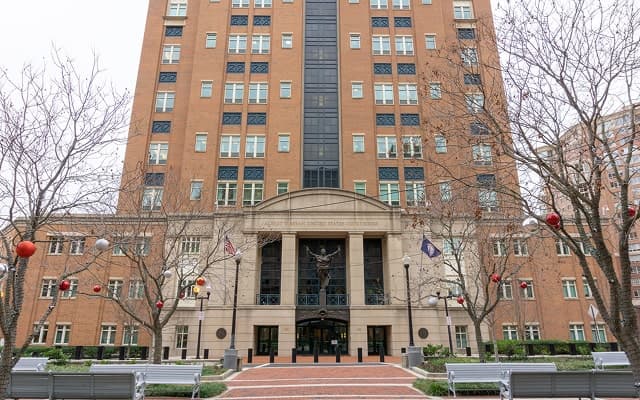
The Western District of Virginia and the Eastern District of Virginia are Virginia's two federal district courts. These courts have locations in Norfolk, Alexandria, Richmond, Newport News, Abingdon, Charlottesville, Danville, Harrisonburg, Lynchburg, and Roanoke. The U.S. Court of Appeals for the 4th Circuit hears appeals from these courts.
The president of the United States nominates the judges who serve on the federal district courts, while the US Senate confirms them. The district courts have the authority to consider almost all federal cases, including civil and criminal proceedings, within the parameters established by Congress and the Constitution.
Just like federal district courts, there are two federal bankruptcy courts located in Virginia, namely the Eastern District of Virginia Bankruptcy Court and the Western District of Virginia Bankruptcy Court. These courts handle bankruptcy cases.
How Many Court Cases Are Filed Each Year in Virginia?
Virginia trial courts receive an estimated ~2.5 million new cases a year, most of them traffic and misdemeanor matters in the district courts, with an overall clearance rate of roughly 100%.
| Case Type | Annual Filings | % of Total | Common Offense/Subtype | Clearance Rate |
|---|---|---|---|---|
| Traffic | ~1,020,000 | ~40.8% | Speeding, reckless driving, DUI, license violations | ~100% |
| Criminal | ~480,000 | ~19.2% | Misdemeanors, felonies, drug and theft offenses | ~99% |
| Civil | ~560,000 | ~22.4% | Unlawful detainers, warrants in debt, contract disputes | ~98% |
| Small Claims | ~90,000 | ~3.6% | Money claims up to $5,000 in general district court | ~99% |
| Domestic Relations | ~150,000 | ~6.0% | Custody, visitation, support, protective orders | ~100% |
| Juvenile | ~90,000 | ~3.6% | Delinquency, status offenses, abuse and neglect | ~100% |
| Other | ~110,000 | ~4.4% | Civil commitments, probate and administrative matters | ~100% |
| Total | ~2,500,000 | ~100% | — | ~99% |
How Do I Look Up Court Cases in Virginia?

In Virginia, anyone who wants to access court records must specify which court has the record and which office they should submit their request to. You may request court records by contacting the clerk of court for the particular court holding the record.
You can contact the Clerk of Court for the Supreme Court and the Court of Appeals for records from those courts. You may also contact the Virginia Circuit Court clerks to get records maintained by the circuit courts.
You can seek public records kept by a Virginia district court clerk, including nonconfidential court records kept in individual case files. Note that there are hourly fees for accessing or searching for requested records, even if no records are located. A district court clerk may impose a fee for copying any document of record, up to $1 for the first two pages and $.50 for each additional page.
Note that you need to have precise information, such as the case number, that will help speed up a search. While written requests are not required, the majority of courts have request forms for the public to use. Among the information required to find a record are the names of the parties, the judge, and the attorneys assigned to the case; the courthouse's address; case specifics; and the court file number.
Number of Active Judges — State & Federal
Virginia's state judges are elected by the General Assembly, while federal district judges are nominated by the president and confirmed by the U.S. Senate. Trial court counts are approximate authorized judgeships; the supreme and appellate court counts are fixed by law.
| Court | Jurisdiction | Active Judges | Selection Method |
|---|---|---|---|
| Supreme Court of Virginia | Statewide appellate | 7 | Elected by the General Assembly, 12-year term |
| Court of Appeals of Virginia | Statewide intermediate appellate | 17 | Elected by the General Assembly, 8-year term |
| Circuit Courts | General jurisdiction trial courts | ~158 | Elected by the General Assembly, 8-year term |
| General District Courts | Limited jurisdiction (misdemeanors, traffic, smaller civil claims) | ~135 | Elected by the General Assembly, 6-year term |
| Juvenile and Domestic Relations District Courts | Limited jurisdiction (juvenile and family matters) | ~125 | Elected by the General Assembly, 6-year term |
| U.S. District Court, Eastern District of Virginia | Federal trial court | ~10 | Nominated by the President, confirmed by the Senate, life tenure |
| U.S. District Court, Western District of Virginia | Federal trial court | ~4 | Nominated by the President, confirmed by the Senate, life tenure |
| Total Active Judges | — | ~456 | — |
What Court Records Are Not Available to the Public in Virginia?
Not every court record is accessible to the general public. Files that have been declared confidential by law or an existing court order cannot be shared or disclosed due to Virginia's public record law. Among the records that are shielded from public view are:
- Academic records and records related to certain educational institutions
- Records connected to public safety
- Records containing health and social service information
- Records containing examination materials or legal memoranda
- Records containing trade secrets or proprietary information
Average Case Processing Time & Clearance Rates
Processing time in Virginia varies widely by case type, from same-day traffic hearings to a year or more for contested felony and civil trials. The figures below are estimates based on typical dispositions in district and circuit courts.
| Case Type | Court Level | Average Processing Time | Description | Clearance Rate |
|---|---|---|---|---|
| Traffic & Parking | Limited Jurisdiction | ~30–60 days | Most infractions are resolved by payment of a fine, a deferral or a short hearing before a judge or magistrate. | ~100% |
| Small Claims | Limited Jurisdiction | ~30–60 days | Informal hearings on small money disputes, usually decided at a single hearing or by default or settlement. | ~99% |
| Misdemeanor Criminal | Limited Jurisdiction | ~60–120 days | Most cases end in a guilty plea or dismissal after arraignment and a pretrial conference; few go to trial. | ~99% |
| Civil Cases | General Jurisdiction | ~9–18 months | Cases move through pleadings and discovery; most settle or are dismissed before trial. | ~98% |
| Domestic Relations | General Jurisdiction | ~6–12 months | Divorce and custody cases are mostly settled by agreement or mediation; contested cases need a final hearing. | ~100% |
| Felony Criminal | General Jurisdiction | ~4–8 months | Cases begin in a preliminary stage and mostly end in plea agreements; a small share go to jury trial. | ~99% |